
The Life and Passion of a Sim Racing Enthusiast Partner
In the modern landscape of digital subcultures, few hobbies combine high-level physical skill, engineering obsession, and raw passion quite like simulated racing. Navigating a relationship with a sim racing enthusiast means entering a world where home real estate is measured in aluminum profile dimensions, date nights might be scheduled around 24-hour endurance races, and telemetry graphs are analyzed with academic rigor.
To live alongside a sim racer is to understand that what looks like a simple video game from the outside is actually a highly competitive, deeply immersive motorsport discipline.
What Is a Sim Racing Enthusiast?
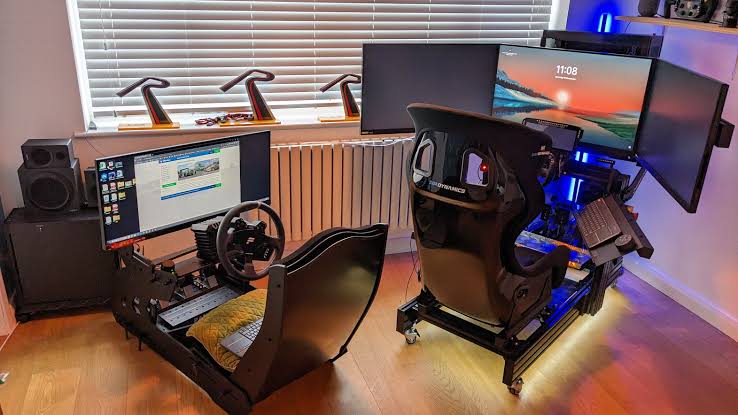
A sim racing enthusiast is not merely a casual gamer picking up a controller on a Friday night. They are dedicated hobbyists, amateur athletes, and technical tinkerers who use sophisticated software and purpose-built hardware to replicate real-world competitive driving.
Unlike arcade racing games designed for quick thrills, authentic simulators like iRacing, Assetto Corsa Competizione, rFactor 2, and Automobilista 2 model real-world physics down to tire deformation, track surface temperature, aerodynamic draft, and chassis flex.
For these drivers, the pursuit is precision. They spend hours hunting for a single tenth of a second on a lap time, practicing braking points, studying apexes, and fine-tuning vehicle setups. To them, the virtual steering wheel is a direct portal to Spa-Francorchamps, the Nürburgring, or Bathurst.
The Field: Hardware, Software, and Culture
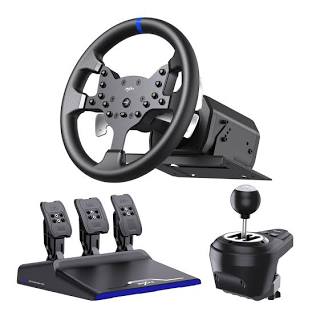
To understand your partner’s passion, it helps to understand the ecosystem they inhabit. The sim racing field sits at the intersection of gaming, mechanical engineering, software customization, and real motorsport.
1. The Hardware Ecosystem
The heart of any dedicated setup is the rig. Entry-level racers might start with desk-mounted wheels, but serious enthusiasts quickly transition to standalone cockpits built from heavy-duty aluminum extrusions.
- Direct Drive (DD) Wheel Bases: High-torque motors attached directly to the steering wheel to convey ground-truth feedback, capable of delivering forces up to 20+ Nm.
- Load Cell & Hydraulic Pedals: Pedals that measure stopping power by pressure rather than distance, mimicking actual hydraulic race car brakes to build muscle memory.
- Visual Integration: Ultra-wide curved monitors, triple-screen arrays, or VR headsets to maximize peripheral vision and spatial awareness.
- Tactile Feedback: Bass shakers and haptic transducers attached to the frame to transmit engine revs, curb strikes, and tire slip directly through the seat.
2. The Software & Competition Field
Sim racers choose platforms based on their preferred disciplines:
| Platform | Primary Focus | Notable Feature |
|---|---|---|
| iRacing | Competitive Multiplayer | Safety and iRating rank systems, official license classes |
| Assetto Corsa Competizione | GT3 & GT4 Racing | Highly accurate tire thermodynamics and official SRO licensing |
| Le Mans Ultimate / rFactor 2 | Endurance & Prototypes | Advanced tire degradation and multi-class traffic management |
| Dirt Rally 2.0 / EA Sports WRC | Off-Road Rallying | Point-to-point stages demanding acute co-driver communication |
What It’s Like Having a Sim Racer as a Partner
Sharing a life with a sim racing enthusiast is a unique experience filled with distinct quirks, moments of intense concentration, and genuine charm.
The Soundscape of the House
Living with a sim racer introduces a brand-new set of household ambient sounds. You will routinely hear:
- The rhythmic, heavy thump-thump of load cell brake pedals being depressed under heavy loads.
- The metallic clack-clack of magnetic paddle shifters during rapid downshifts.
- Muttered self-critiques about “missing the apex” or “getting squeezed on turn four.”
- The hum of high-performance cooling fans during long stints.
Spatial and Aesthetic Realities
A serious rig requires dedicated floor space. It often becomes a focal piece in a home office, spare room, or corner of the living area. Supporting a sim-racing partner means accepting that cable management is an ongoing art form, and industrial aluminum profiles are a permanent element of the home decor.
The Rhythm of Race Weekends
Sim racing follows real-world motorsport schedules. When major events happen—like the Virtual 24 Hours of Nürburgring or organized league races on Tuesday nights—your partner’s calendar will be locked in. Endurance events often involve team stints where drivers swap seats virtually at 3:00 AM, requiring co-planning, late-night coffee support, and quiet surroundings during rest windows.
The Positive Traits They Bring to a Relationship
While the hobby demands time and space, the qualities that make someone a good sim racer also make them a fantastic partner:
- Patience and Persistence: Achieving consistency on track requires hundreds of practice laps. Sim racers understand that mastery takes time and rarely give up when faced with frustration.
- Attention to Detail: From analyzing telemetry data to tweaking suspension dampening, they possess a sharp eye for nuance and logical problem-solving.
- Focus Under Pressure: Navigating a 30-car field into Turn 1 requires calm emotional control—a trait that translates well to real-world stress management.
- Support for Passion: Because they care deeply about their own intense hobby, they naturally respect and encourage their partner’s independent passions and personal space.
Ultimately, having a sim racing enthusiast as a partner means supporting someone driven by continuous self-improvement, technical curiosity, and pure, unfiltered enthusiasm for the chase.
View profile here.
Connect with Sim Racing Enthusiast across the web and social media: